How to Choose the Best Drone and Camera for Aerial Photography?
Choosing the right drone and camera for aerial photography can be overwhelming. With numerous options available, it’s easy to feel lost. Understanding your specific needs is crucial in making the right decision.
When selecting a drone and camera, consider the purpose of your photography. Are you capturing landscapes, events, or wildlife? Each type might require different features. Look for drones that offer stabilization; this is key for clear images. Camera resolution matters too. A higher megapixel counts often deliver better quality shots.
Don’t forget to evaluate your budget. Some drones come with integrated cameras, while others allow you to attach your own. This flexibility can affect your choice greatly. Take time to research various models and user reviews. Learning from others’ experiences can prevent costly mistakes. Remember, there is no perfect option; only what works best for you.
Factors to Consider When Choosing a Drone for Aerial Photography
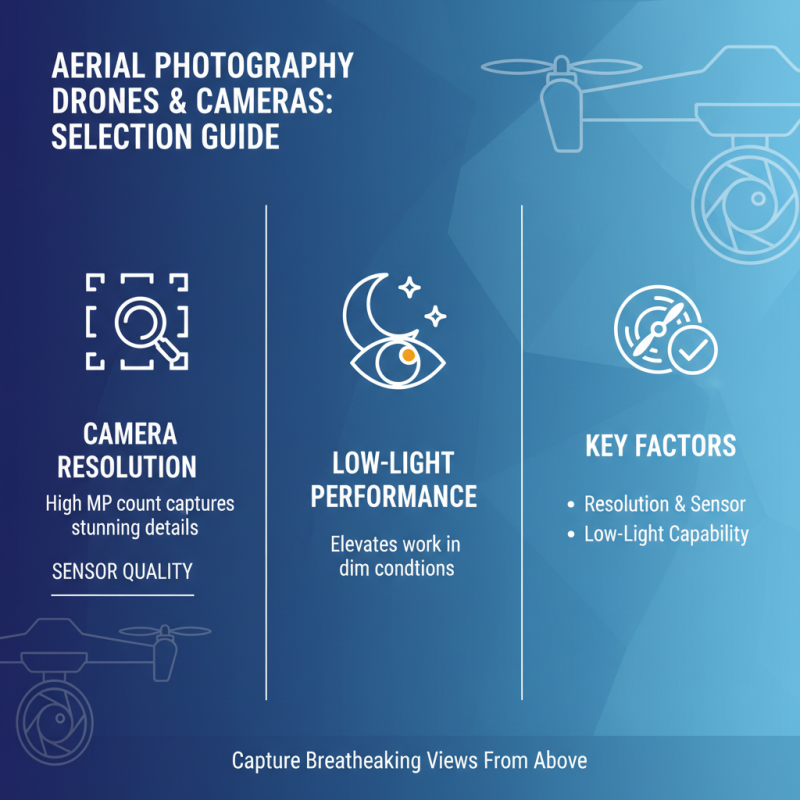
Choosing the right drone for aerial photography involves several key factors. The camera quality is paramount. Look for a drone that offers at least 12 MP resolution. A larger sensor captures more light. This results in better images, especially in low light. Gimbal stabilization is also essential. It ensures shots are smooth and free from unwanted shakes. If the drone wobbles, your photos will suffer.
Flight time and range are critical as well. Longer flight times allow for more opportunities to capture the perfect shot. Aim for a drone that offers at least 20 minutes of flight time. Similarly, a good range helps you access various locations. However, keep in mind the battery life drops considerably in colder weather. Have spare batteries on hand.
Ease of use matters too. Some drones can be complex for beginners. A steep learning curve may discourage you. Look for user-friendly options that allow you to start capturing beautiful images quickly. Finally, don’t forget to consider your budget. Higher-end models offer great features but can be costly. Reflect on how much you’re willing to invest, especially if you’re new to aerial photography.
How to Choose the Best Drone and Camera for Aerial Photography
| Feature |
Importance |
Recommended Range |
| Camera Resolution |
High |
12 MP - 20 MP |
| Flight Time |
High |
20 - 30 minutes |
| Stabilization |
High |
3-axis gimbal |
| Range |
Medium |
1 - 5 km |
| Portability |
Medium |
Foldable or compact design |
| Ease of Use |
High |
User-friendly interface |
| Price |
High |
$500 - $5000 |
Understanding Different Types of Drones for Photography Purposes
When choosing a drone for aerial photography, it’s essential to understand the different types available. There are mainly two categories: quadcopters and fixed-wing drones. Quadcopters are popular for their maneuverability. They can hover in place, providing excellent stability for capturing detailed images. However, they often have shorter flight times due to their power consumption.
On the other hand, fixed-wing drones can cover larger distances. They resemble small airplanes and are ideal for surveying vast areas. However, they require more space for takeoff and landing. For newcomers, quadcopters may feel more accessible, but they can be challenging to master. Beginners can easily underestimate the learning curve.
Camera quality is crucial as well. Many drones come with integrated cameras, while others allow for interchangeable models. This flexibility can lead to better photography results, but selecting the right camera can be tricky. It's not just about resolution; lens options, image stabilization, and sensor size matter. Investing in a high-quality camera can be rewarding, but it can also lead to frustration if it doesn’t meet your expectations. Finding the right balance between drone capability and camera performance is vital yet difficult.
Key Features to Look for in a Camera for Aerial Photography
When choosing a camera for aerial photography, several key features stand out. Megapixels matter. Cameras with at least 20 MP offer clearer, sharper images. According to a recent industry report, higher resolution can significantly enhance image quality in aerial shots. However, more megapixels also mean larger file sizes. Managing storage effectively becomes crucial.
Lens quality plays a vital role as well. A good lens affects clarity and color accuracy. Look for lenses with a wider aperture, ideally f/2.8 or better, allowing more light for crisp images. Additionally, stabilization is essential. A camera without proper stabilization can result in shaky footage, ruining aerial shots. Many professionals recommend models with 3-axis gimbals for smooth results.
Battery life is another critical factor. Flying time often limits shooting opportunities. A drone camera combo with at least 30 minutes of flight time is ideal. However, unexpected battery drains happen. Always be prepared with extras. Also, consider the learning curve. Some models can be tricky to use, leading to missed shots. Choosing a user-friendly interface can save frustration in the field.
Tips for Enhancing Aerial Photography with Drone Technology
Aerial photography leverages drone technology for breathtaking images. To boost your shots, focus on lighting and composition. The golden hour is ideal. It provides soft light and vivid colors. Studies show that images taken at sunrise or sunset are perceived as more appealing.
Understanding your drone's capabilities is crucial. Many drones have adjustable camera settings. Finding the perfect balance between aperture and shutter speed can enhance clarity. An optimal ISO setting reduces noise in low-light conditions. Experimentation is key. Results may vary widely based on conditions.
Think about your flying techniques. Smooth, controlled movements yield the best footage. Rapid movements can lead to blurry images. The data suggests that over 40% of aerial photos suffer from motion blur. Learning to hover steadily can greatly improve your results. Always be mindful of changing weather conditions that may affect your shoot. Adapting is a vital skill.